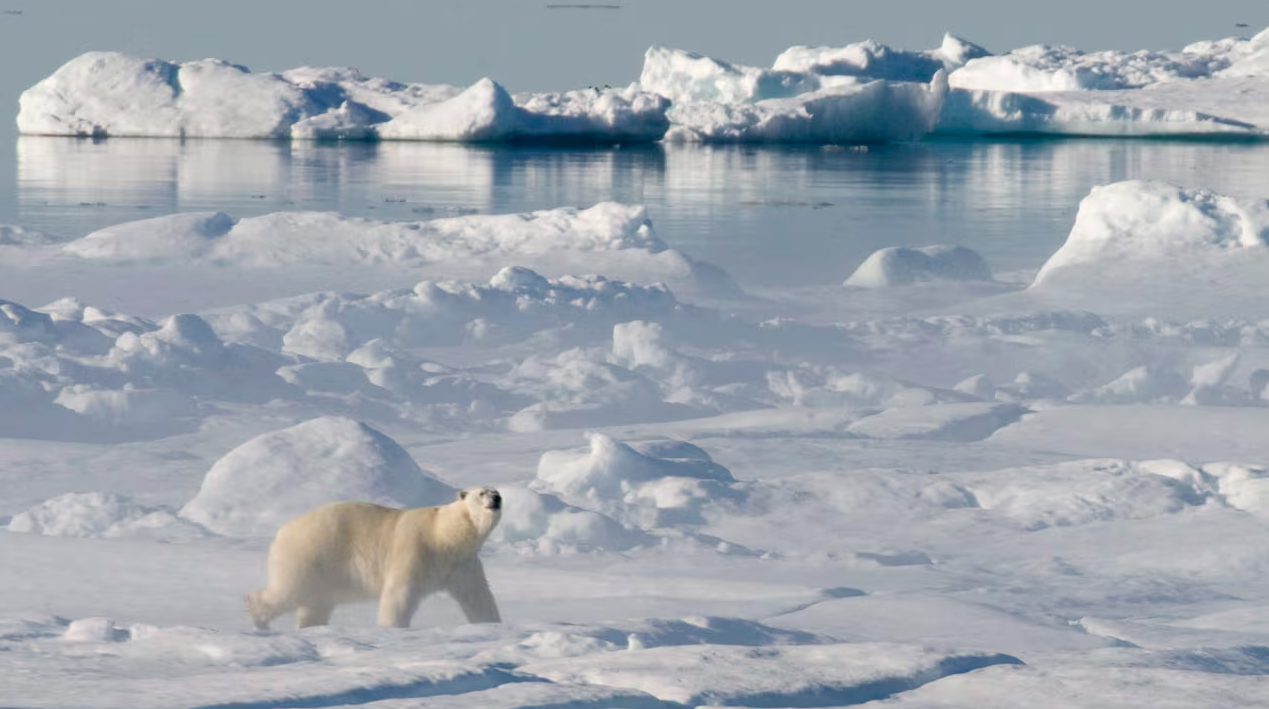
Key Findings of the Study
The researchers focused on several critical aspects of Arctic ice:
Advertising
-
Decline in Multi-Year Ice
Multi-year ice, which survives at least two summers, is becoming increasingly rare. The study shows a 40% reduction over the last two decades, indicating that the Arctic is transitioning toward thinner, more seasonal ice. -
Earlier Melt and Later Freeze
Satellite data reveal that ice now melts earlier in the spring and forms later in the autumn, lengthening the ice-free period in the Arctic Ocean. This trend contributes to rising ocean temperatures and further accelerates ice loss. -
Thinning Ice Layers
Ice cores and submarine sonar measurements indicate a significant reduction in ice thickness. Thinner ice is more susceptible to melting and breaking apart, affecting both wildlife and maritime navigation. -
Regional Variability
While the overall trend is toward decline, the study notes that ice conditions vary by region. For example, certain areas in the central Arctic Ocean retain thicker ice, while peripheral seas such as the Beaufort and Chukchi have experienced more dramatic losses. -
Impact on Marine Ecosystems
Changes in ice cover influence plankton blooms, fish migration, and predator-prey dynamics. Reduced ice creates open-water habitats that alter feeding patterns and migration routes, posing risks to traditional food sources for Indigenous peoples and wildlife.
Implications for Indigenous Communities
Indigenous communities across northern Canada have long observed changes in ice conditions, with knowledge passed down through generations. The study’s findings align with these observations:
-
Hunting and Travel: Thinner ice and unpredictable freeze patterns affect safe travel routes and hunting practices.
-
Cultural Practices: Seasonal changes in ice influence traditional ceremonies, knowledge systems, and community gatherings.
-
Food Security: Declines in ice-dependent species, such as seals, affect subsistence hunting and nutrition.
Elder Margaret Nanabush from Nunavut comments, “We have seen the ice changing over the years. What researchers observe confirms what our people have known all along. It affects our way of life deeply.”
Global Climate Implications
The decline in Arctic ice has ramifications far beyond the polar regions:
-
Sea Level Rise: Melting sea ice indirectly contributes to global sea level changes through interactions with land ice sheets and glaciers.
-
Weather Patterns: Reduced ice cover affects atmospheric circulation, contributing to extreme weather events, including cold snaps and storms in North America and Europe.
-
Ocean Currents: Ice melt influences salinity and density gradients, affecting major currents like the Atlantic Meridional Overturning Circulation.
Climate models indicate that continued ice loss may accelerate warming trends, creating feedback loops that amplify global climate change impacts.
Technological Methods in the Study
The research combined multiple advanced technologies to monitor Arctic ice:
-
Satellite Remote Sensing: High-resolution imagery provided comprehensive mapping of ice extent, movement, and melt patterns.
-
Ice Buoys and Sensors: Floating instruments measured temperature, thickness, and salinity, providing ground-truth data to complement satellite observations.
-
Submarine and Aerial Surveys: Sonar and LIDAR scans allowed precise measurements of ice thickness and under-ice topography.
-
Climate Modeling: Simulations predicted future ice conditions under various greenhouse gas emission scenarios, aiding long-term planning and policy development.
The combination of observational and modeling techniques gives scientists a more holistic understanding of Arctic ice dynamics than ever before.
Reactions from the Scientific Community
The study has sparked wide discussion among climate scientists and environmental organizations:
-
Urgency for Action: Researchers emphasize the need for immediate action to reduce greenhouse gas emissions to slow ice loss.
-
Policy Development: The findings support international climate agreements and inform Arctic governance, particularly regarding shipping routes, resource extraction, and environmental protection.
-
Interdisciplinary Collaboration: Experts stress collaboration among glaciologists, oceanographers, climatologists, and Indigenous knowledge holders to ensure holistic solutions.
Dr. Tremblay notes, “Science alone cannot address Arctic changes. We need inclusive, evidence-based policies that consider both ecological and social dimensions.”
Policy and International Implications
The findings intersect with international discussions on Arctic management:
-
Shipping Routes: Reduced ice opens new maritime pathways, creating economic opportunities and navigational risks. Policies must balance commerce, safety, and environmental protection.
-
Resource Access: Thinner ice may allow increased access to oil, gas, and minerals, raising questions about sustainability and Indigenous rights.
-
Environmental Protections: Global cooperation is essential to preserve fragile ecosystems and prevent irreversible damage.
Canada, as an Arctic nation, plays a leading role in negotiating these complex international issues, emphasizing environmental stewardship and collaboration with Arctic neighbors.
Public Awareness and Education
Increasing public awareness of Arctic ice conditions is critical for fostering engagement and action:
-
Educational Initiatives: Schools and universities incorporate Arctic studies and climate science into curricula, raising awareness of global interconnections.
-
Media Coverage: News outlets highlight changes in ice conditions and their consequences for ecosystems, communities, and weather patterns.
-
Citizen Science Programs: Volunteers participate in ice observation projects, contributing valuable data and increasing community engagement.
Public understanding is essential to support policies and behavioral changes that mitigate climate impacts.
Looking Ahead
Researchers emphasize that Arctic ice will continue to evolve rapidly, necessitating ongoing monitoring and adaptation:
-
Enhanced Monitoring: Expanding satellite networks, buoys, and aerial surveys will provide continuous data.
-
Climate Mitigation Efforts: Reducing emissions is vital to slow ice loss and minimize global impacts.
-
Community Engagement: Collaborating with Indigenous communities ensures that policies respect traditional knowledge and cultural needs.
-
International Cooperation: Coordinated global efforts are required to manage shipping, resource development, and environmental protection sustainably.
Conclusion
The new findings on Arctic ice conditions underscore both the fragility and the critical importance of the polar environment. Declining multi-year ice, thinning layers, and extended ice-free periods are not just regional concerns—they reverberate globally, affecting ecosystems, weather systems, and human societies.
For Indigenous communities, the research validates lived experience, highlighting the need for culturally informed policies that preserve traditional practices and ensure food security. For scientists and policymakers, the study provides evidence to guide climate action, Arctic governance, and global environmental policy.
Dr. Tremblay summarizes the significance: “The Arctic is changing at a pace that demands attention. What we observe now will shape the world for generations. Understanding, adapting, and acting responsibly is essential for both Arctic communities and the planet as a whole.”
Canada’s Arctic, long a symbol of resilience and environmental beauty, now stands as a warning and a call to action—its ice reflecting not only sunlight but the urgent need for global stewardship and sustainable practices.