Major Airports Affected
Several of Canada’s busiest airports reported disruptions:
Advertising
-
Toronto Pearson International Airport: Experienced the highest volume of cancellations, with over 200 flights delayed due to snow and ice conditions.
-
Vancouver International Airport: Multiple flights were delayed for de-icing, and staff worked extended hours to clear runways and assist passengers.
-
Montréal–Trudeau International Airport: Flight schedules were adjusted as ground crews focused on maintaining safe operations in icy conditions.
-
Calgary International Airport: De-icing operations and snow clearance caused delays for both domestic and international flights.
Officials emphasized that passenger safety was the top priority, with operational adjustments made to reduce risks associated with icy and snowy conditions.
Airline and Airport Responses
Airlines and airport authorities implemented several measures to manage the disruption:
-
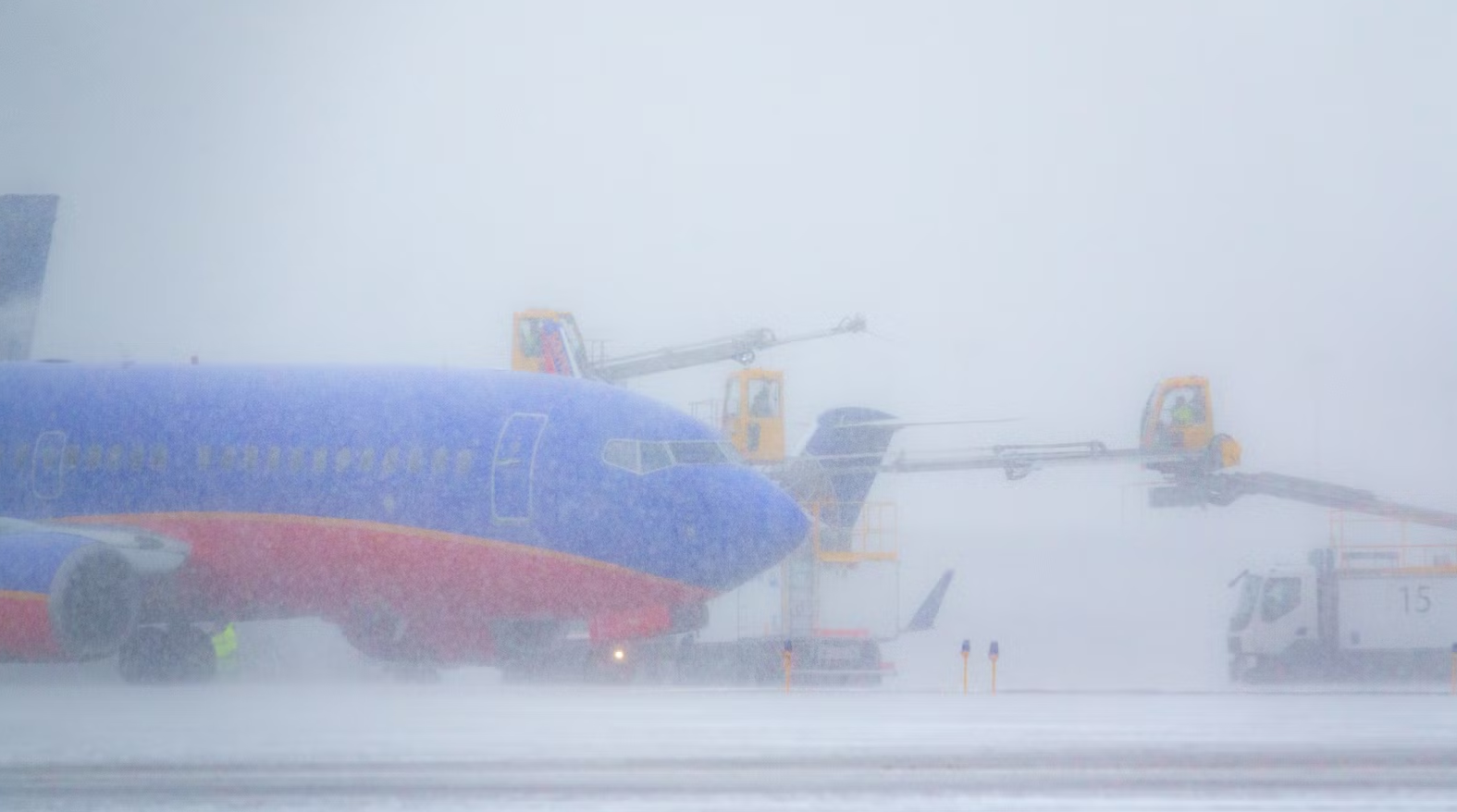
Enhanced De-Icing Operations
Aircraft required extended de-icing procedures to ensure safe departures. Ground crews worked in shifts to handle the surge in demand. -
Communication with Passengers
Airlines used mobile apps, social media, and email alerts to keep passengers informed about flight status, gate changes, and delays. -
Contingency Planning
Staff coordinated alternative arrangements, including rebooking flights, providing hotel accommodations, and organizing bus transfers where necessary. -
Coordination with Air Traffic Control
Controllers adjusted flight schedules to manage congestion and ensure safe runway operations amid rapidly changing weather conditions.
Passenger Experiences
Travelers at affected airports shared a wide range of experiences:
-
Frustration and Delays: Many passengers faced hours-long waits in crowded terminals, often due to the limited availability of seating and food services.
-
Safety Appreciation: Despite delays, passengers generally appreciated the emphasis on safety over schedule adherence.
-
Communication Challenges: Some travelers reported confusion due to inconsistent updates from airlines, highlighting the need for clear and continuous communication during disruptions.
Social media platforms were flooded with updates, pictures of snow-covered runways, and personal accounts of extended waits, illustrating both the inconvenience and the human dimension of such events.
Economic and Operational Implications
Flight disruptions caused by sudden cold fronts carry significant economic and operational consequences:
-
Financial Costs: Airlines incur additional expenses from crew overtime, rebooking passengers, and delayed cargo shipments.
-
Supply Chain Impact: Delays can ripple through logistics networks, affecting time-sensitive deliveries and international trade.
-
Airport Operations: Increased demand for de-icing, snow clearance, and ground support strains airport budgets and personnel.
Industry analysts note that the frequency of extreme weather events, potentially linked to climate change, necessitates investment in more resilient infrastructure and operational strategies.
Safety Considerations
Cold weather introduces multiple safety risks for aviation:
-
Runway Conditions: Snow and ice can reduce friction, increasing the risk of runway excursions during takeoff or landing.
-
Aircraft Icing: Ice accumulation on wings or control surfaces can affect lift, stability, and overall flight performance.
-
Ground Crew Hazards: Working in icy, cold conditions increases risks of slips, falls, and frostbite.
Aviation authorities emphasize that while delays are inconvenient, they are critical to maintaining the safety of passengers and crew.
Technology and Preparedness Measures
Airports and airlines use advanced technology and planning to mitigate cold weather impacts:
-
Runway Sensors: Detect ice accumulation and alert ground crews to hazards.
-
Weather Forecasting: Sophisticated meteorological models help anticipate cold fronts, allowing proactive scheduling adjustments.
-
De-Icing Equipment Innovations: Modern fluid systems and heated pads improve efficiency and reduce delays during aircraft de-icing.
-
Passenger Communication Systems: Real-time updates via apps and messaging platforms improve transparency and reduce frustration.
Community and Regional Responses
Municipal and provincial governments also play a role in managing the effects of sudden cold fronts:
-
Road Clearing and Public Transit Coordination: Ensuring access to airports and maintaining local transportation networks is crucial.
-
Emergency Services: Police, fire, and medical teams prepare for incidents related to weather conditions, including vehicle accidents and slips on icy surfaces.
-
Public Awareness Campaigns: Residents are advised to plan travel carefully, prepare for potential delays, and follow safety guidelines during winter storms.
Lessons Learned and Future Planning
The unexpected cold front serves as a case study for improving resilience in Canada’s aviation and transportation sectors:
-
Advanced Warning Systems: Early alerts and real-time monitoring help mitigate disruptions.
-
Infrastructure Investment: Upgrading airport heating, runway lighting, and de-icing equipment enhances operational efficiency.
-
Staff Training: Ensuring that ground crews and airline personnel are prepared for extreme winter conditions is critical.
-
Passenger Preparedness: Encouraging travelers to plan for weather-related delays, pack essentials, and maintain flexibility in schedules.
Industry experts stress that winter weather is an inherent risk in Canadian aviation, requiring ongoing investment and adaptive strategies.
Looking Ahead
Airlines and airport authorities are analyzing the cold front’s impact to improve future responses:
-
Operational Debriefs: Post-storm assessments help identify bottlenecks, resource gaps, and communication shortcomings.
-
Policy Adjustments: Adjustments to scheduling, staffing, and contingency protocols aim to minimize disruption during future events.
-
Technology Integration: Continued adoption of AI, predictive analytics, and automation can enhance forecasting and real-time decision-making.
These measures aim to strengthen Canada’s aviation system against increasingly volatile winter weather and ensure that passengers experience minimal disruption without compromising safety.
Conclusion
The recent unexpected cold front underscored the challenges Canadian airports face during extreme winter conditions. Flight delays and cancellations, logistical strain, and passenger frustration highlight the delicate balance between safety, efficiency, and operational capacity.
By leveraging advanced technology, improving communication, and investing in resilient infrastructure, airports and airlines can better navigate extreme weather events. While winter storms will inevitably test Canada’s aviation system, proactive planning and coordination among airlines, airport authorities, government agencies, and travelers can help minimize disruptions, maintain safety, and ensure that Canada’s airports continue to function as vital hubs for domestic and international travel.
As Canadians reflect on this event, the consensus is clear: while cold weather is an unavoidable challenge, preparation, adaptation, and clear communication are key to keeping the nation’s skies safe and accessible during even the harshest winter storms.