Home Uncategorized
Category:

Uncategorized

Advertising

Sometimes the most talked-about moments of a television interview aren’t the bold statements, but rather the questions that prompt the interviewee to explain their position in greater detail.

This is exactly what happened during a recent conversation between journalist Sarah Ferguson and Commonwealth Bank CEO Matt Comyn.
Initially, the interview focused on artificial intelligence and how new technologies are changing the way Australia’s largest companies operate. However, the conversation gradually shifted to topics that affect virtually every Australian: employment, the economy, taxes, and the future of the labor market.

Instead of focusing exclusively on the banking industry, Sarah Ferguson suggested taking a much broader view of the changes underway.
She asked whether society is prepared for the fact that the development of artificial intelligence could significantly alter the traditional labor market, and how large companies should respond to such changes.
Matt Comyn noted that technology is already changing the nature of many professions; however, in his view, the main challenge remains preparing people for new skills, rather than replacing humans with machines.

After the program aired, the discussion quickly moved to social media.
However, users cited the conversation about the future of work, professional skills, and the role of humans in the age of artificial intelligence far more often than banking-related issues.
Many noted that such topics rarely take center stage in interviews with the heads of major financial institutions.

Later, the Conversation Turned to the Economy

In the second part of the interview, the focus shifted to the budget and the tax system.
Sarah Ferguson asked several follow-up questions about the capital gains tax and possible changes to tax policy.
Matt Comyn replied that certain elements of the tax system do indeed warrant discussion, but emphasized that any changes must take into account the impact on investment, entrepreneurship, and long-term economic growth.

Political and economic commentators note that the audience’s interest is not due to the emotional nature of the interview.
On the contrary, what drew attention was the calm yet substantive discussion of several topics that concern millions of Australians today: the cost of living, the future of jobs, the adoption of artificial intelligence, and the state of the economy.

It was precisely this combination of issues that made the interview notable far beyond the financial community.
Although the interview has already concluded, specific segments of it continue to be discussed online and in business circles.
For some viewers, this conversation prompted reflection on how rapidly the labor market is changing.
For others, it was an opportunity to better understand the views of the head of the country’s largest bank on the economic changes that may affect Australia in the coming years.

One thing remains clear: the conversation between Sarah Ferguson and Matt Comyn went far beyond a typical interview about the banking industry and continues to spark interest among both experts and the general public.

Advertising

Not every television interview continues to be discussed after it airs. However, the conversation between journalist Sarah Ferguson and Commonwealth Bank CEO Matt Comyn turned out to be just such a case.

Although the conversation began as a routine discussion of the economy and new technologies, it became clear within a few minutes that it was addressing issues of concern to a much broader audience.

The main topic of the conversation was the impact of artificial intelligence on the operations of banks, businesses, and the daily lives of Australians.

Sarah Ferguson returned to the same question several times: how quickly familiar professions might change, and whether major companies are prepared for these changes.

Matt Comyn replied that new technologies are already gradually becoming part of everyday work and that organizations will have to strike a balance between automation and employee development.

It was this particular excerpt from the interview that social media users subsequently began actively sharing.

The discussion quickly spread beyond the professional community.

Some viewers saw the bank chief’s words as a signal of the sweeping changes awaiting the labor market.

Others noted that the discussion was less about job cuts and more about the need to acquire new skills and adapt to changing conditions.

Political commentators note that the interest in the interview stems not only from the personalities of the participants.

Today, issues related to artificial intelligence, digital technologies, and the economy remain among the most widely discussed topics in the country.

Therefore, any public discussion on this topic inevitably generates a wide response.

According to analysts, it was precisely the calm and candid nature of the conversation that made it stand out.

Instead of bombastic statements, viewers saw a detailed discussion of how technological changes could affect the daily lives of millions of people.

After the program aired, various clips from the interview continued to circulate online, and users began discussing not only Matt Comyn’s answers but also the questions Sarah Ferguson asked.

For many, it was these questions that set the tone for the entire conversation and helped take the discussion beyond the usual banking topics.

Although the interview did not feature any sensational statements, it once again demonstrated just how much interest Australians have in topics such as the economy, new technologies, and the future of the labor market.

That is precisely why discussion of this program continues to be one of the most talked-about topics in recent days.

Advertising

When Matt Comyn, the head of Australia’s largest bank, appeared for an interview with Sarah Ferguson, the conversation was supposed to focus on the economy, technology, and the future of the banking industry.

However, it wasn’t so much the topic of the conversation itself that caught viewers’ attention as a single moment that unexpectedly changed the tone of the entire interview.

At one point, Ferguson steered the conversation away from general questions about the development of artificial intelligence toward a more practical topic: exactly how new technologies might affect the lives of ordinary Australians.

For many viewers, it was this shift that proved to be the most interesting.

Instead of discussing abstract technological trends, the conversation began to address issues that directly affect millions of people: jobs, professional skills, and future changes in the labor market.

Matt Comyn acknowledged that artificial intelligence is already beginning to change work processes across a wide range of economic sectors.

According to him, the main challenge for companies lies not only in implementing new technologies, but also in helping employees adapt to these changes.

These remarks quickly caught the audience’s attention.

After the program aired, clips from the interview began circulating on social media, where users actively discussed the possible consequences of technological changes.

Some saw the bank CEO’s comments as a warning about the major changes that await the labor market in the coming years.

Others, on the contrary, considered his stance to be quite calm and measured, noting that similar processes had occurred during previous technological revolutions.

Interestingly, it was not the bold statements that sparked the most discussion, but rather Ferguson’s attempt to get as specific an answer as possible to the question of how quickly these changes might occur.

Some commentators noted that it was this particular moment that made the interview stand out among the multitude of other economic programs.

According to analysts, the popularity of this conversation can be explained quite simply.

Artificial intelligence technologies are no longer a topic exclusively for specialists.

Today, they are directly linked to the work, education, business, and daily lives of millions of people.

That is why any public discussion of these issues involving the leaders of major companies automatically attracts the attention of a wide audience.

Although the interview did not feature any high-profile political statements or sensational news, it was precisely the combination of tough questions and candid answers that made it one of the most talked-about programs in recent days.

For many Australians, this conversation was not just an interview about technology, but an opportunity to reflect on what the job market will look like in five or ten years.

That is precisely why interest in the conversation between Sarah Ferguson and Matt Comyn continues to linger even several days after the program aired.

Advertising

A New Debate Between Jacqui Lambie and Angus Taylor Has Once Again Captured Australia’s Attention

Australia’s political agenda has once again taken center stage following an exchange of remarks between Senator Jacqui Lambie and Opposition Representative Angus Taylor on issues of the economy and governance.
Although such debates occur regularly in Parliament, this particular discussion has sparked significant interest among journalists, experts, and social media users.

In recent weeks, government spending, the cost of living, and the country’s economic outlook have remained among the top issues in Australia.
During the discussion of these issues, Jackie Lambie and Angus Taylor presented different views on how the government should address the challenges it faces.
Specific statements made by the politicians quickly spread across news outlets and became the subject of lively discussion online.

According to analysts, it was not so much the disagreement itself that caught the public’s attention as the contrast between the two politicians’ approaches.

Lambie traditionally focuses on issues that directly affect ordinary citizens, while Taylor more often speaks about long-term economic strategy and the effectiveness of government decisions.
The difference between these approaches sparked numerous discussions among Australians.

After the first reports appeared, social media users began actively discussing the arguments of both sides.
Some believed that the country needed a more cautious approach to spending budget funds.
Others argued that the government should focus more on supporting the public amid ongoing economic difficulties.

As a result, the discussion quickly became one of the week’s most prominent political topics.

Experts note that such debates are becoming increasingly important as new economic policy decisions loom.
In their view, public interest in such debates demonstrates how closely Australians are following issues related to the budget, taxes, and government programs.
Furthermore, analysts believe that such public debates help citizens better understand the differences between the positions of political leaders.

Despite the lack of any new decisions following the exchange of statements, the discussion surrounding Lambie and Taylor’s comments continues.

For some members of the public, this story has provided an opportunity to evaluate the proposals of various political parties.
For others, it has been a chance to discuss the future of Australia’s economic policy and its impact on citizens’ daily lives.

One thing remains clear: when Jacqui Lambie and Angus Taylor speak out on economic issues, their words continue to capture the nation’s attention.

Advertising

Why John Lawes’ Name Is Once Again the Talk of Australia

The name of legendary radio host John Lawes has once again taken center stage after archival recordings of his broadcasts and interviews began circulating widely online.

For many Australians, Lawes remains one of the most recognizable figures in the history of national radio. His voice has accompanied several generations of listeners, and his on-air style has become part of Australian media culture.

In recent weeks, interest in his past appearances has grown significantly. Social media users have begun sharing clips from old interviews, discussing the host’s views on radio work, the role of journalists, and changes in the media landscape.

Particular attention has been drawn to his reflections on how communication between hosts and audiences is changing in the age of new technologies.

Some viewers noted that many ideas discussed years ago sound surprisingly relevant today.

According to media experts, this interest is not surprising. For decades, John Lawes has remained one of the most influential figures in Australian talk radio, and his statements have often sparked public debate.

After the archival recordings were released, users began recalling the most memorable moments of his career and discussing the impact he had on the development of the Australian media.

Many note that today’s media landscape is vastly different from the one in which Lawes began his career. However, some of the topics he raised on the air continue to spark interest today.

The discussion quickly moved beyond individual articles and evolved into a broader conversation about how the media has changed over the past decades.

For some, John Lawes remains a symbol of classic talk radio.

For others, his story is an example of just how much influence popular hosts can have on public discourse.

The interest in archival material shows that even years later, well-known media personalities continue to capture the audience’s attention.

That is precisely why John Lawes’s name has once again found itself at the center of discussion, and interest in his long career continues to grow among listeners across Australia.

Advertising

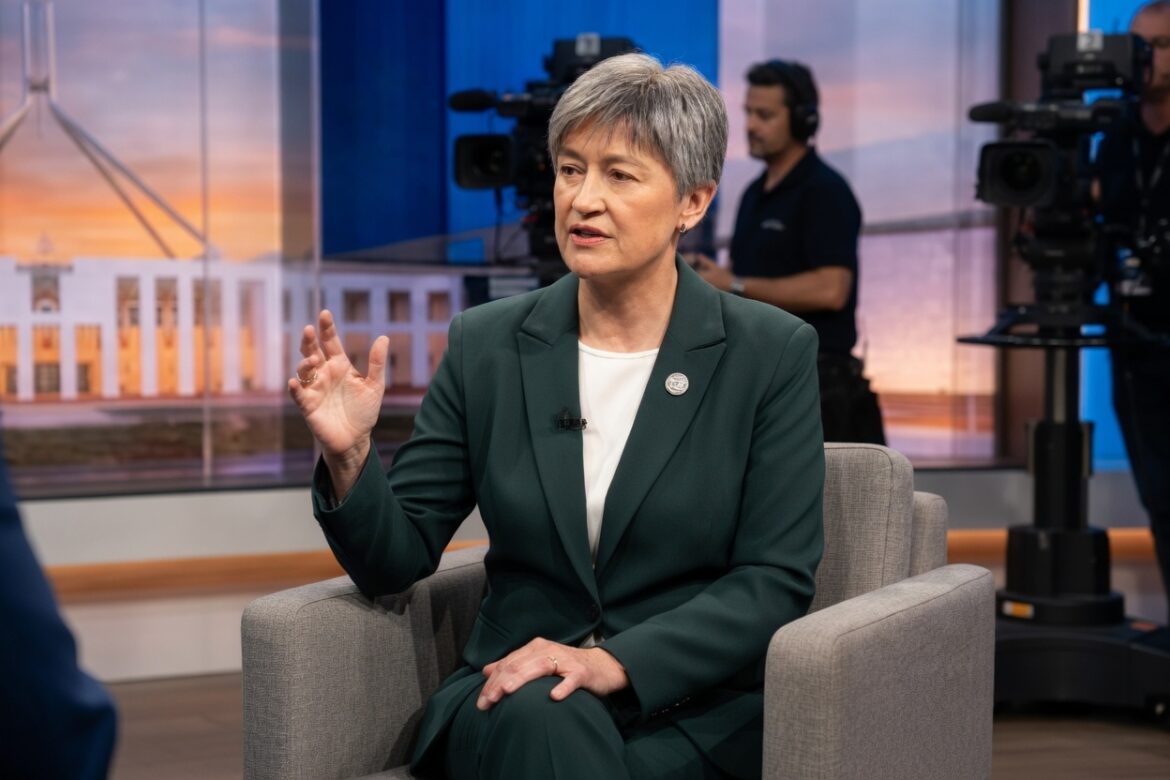
Penny Wong’s interview sparked a wave of discussion in Australia following a tense broadcast

Australian Foreign Minister Penny Wong found herself back in the public spotlight following a tense interview with ABC host Sarah Ferguson, in which they discussed international security, Australia’s diplomatic relations, and growing pressure on the government regarding foreign policy.

What began as a standard political interview quickly turned into one of the most talked-about television moments of the week.

An unexpected turn during the live broadcast

During the interview, Sarah Ferguson asked Penny Wong a series of direct questions about international crises, Australia’s alliance commitments, and the government’s response to growing global instability.

However, viewers’ attention was drawn not only to the topic of the conversation itself, but also to the noticeably tense nature of the dialogue.

On several occasions, the host persistently returned to questions about how transparent the government’s position was and whether Australians were truly being given the full picture regarding international agreements and diplomatic commitments.

It was precisely after this that discussion on social media intensified sharply.

What sparked this reaction

Particular attention was drawn to the moment when Penny Wong acknowledged that, in matters of international diplomacy, not all information can be discussed publicly in real time.

This statement quickly went viral on social media.

Some users argued that this approach is a normal part of diplomatic work and the protection of national interests.

Others began to debate whether this means the public is only getting part of the full picture on key international issues.

Political analysts noted that it is precisely this kind of phrasing that often triggers intense public reactions.

Why This Broadcast Caused a Stir

Sarah Ferguson’s style—known for her tough interviews and persistent questions—drew additional attention to the interview.

Viewers actively debated whether the host succeeded in putting the minister on the spot or whether Penny Wong, on the contrary, managed to maintain control of the conversation.

Clips from the interview quickly began circulating on X, Facebook, and news pages.

Commentators debated how candid politicians’ public statements should be when it comes to foreign policy and security issues.

What Penny Wong Said Later

Following the broadcast, government officials emphasized that Australia’s position remains consistent and focused on protecting national interests, international stability, and cooperation with allies.

Penny Wong herself has previously stated on multiple occasions that diplomacy requires caution, especially during periods of international tension.

Nevertheless, the broadcast itself has already become the subject of widespread public debate.

Why this story continues to gain momentum

Political experts note that today, even a single tense interview can shift the public agenda.

When it comes to foreign policy, security, and international commitments, every word spoken by public figures is analyzed with particular scrutiny.

This is precisely why the interview between Penny Wong and Sarah Ferguson continues to be discussed across Australia.

Advertising

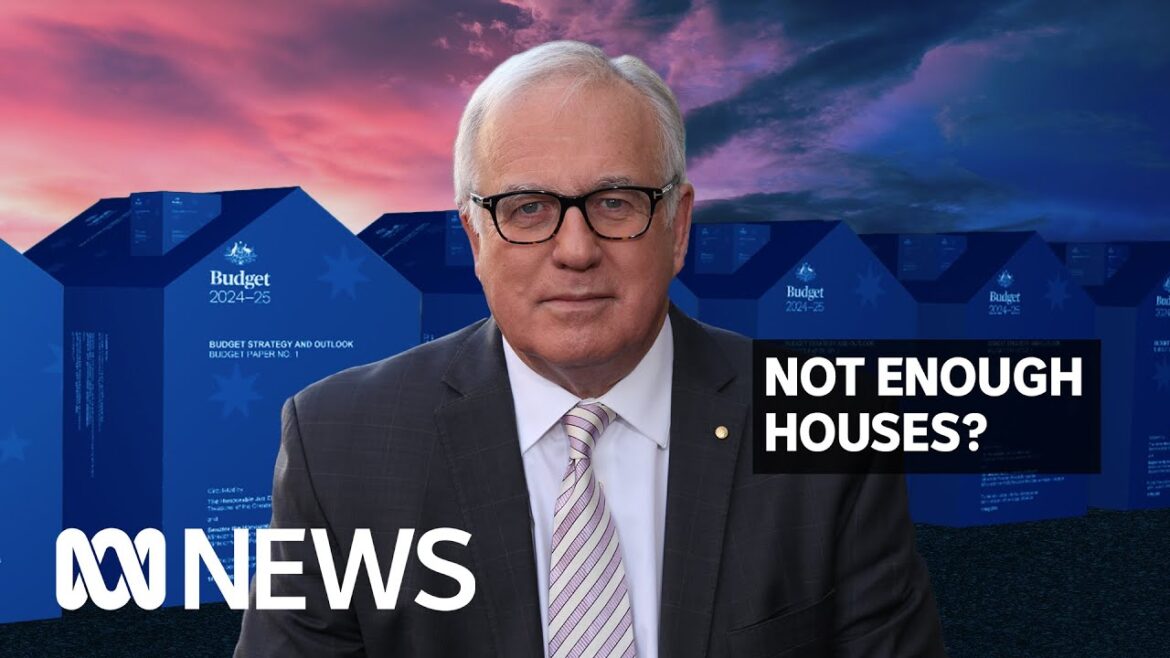
Australia’s housing system is increasingly becoming the subject of heated public debate. In one of his analytical articles, ABC financial journalist and commentator Alan Kohler described in detail how housing affordability in the country has changed over the past decade and why many experts consider the situation to be alarming.

A frank conversation about the property market

During a recent television discussion on economic issues, Kohler returned to the topic of the housing market. On air, he noted that property prices have been rising significantly faster than household incomes, and this is gradually changing the structure of society.

According to him, the gap between wages and housing costs is becoming increasingly noticeable. He gave a personal example: when he and his wife bought their first home in 1980, the price of the property was approximately three to four times the family’s annual income. Today, he said, many young families are faced with a situation where the cost of a home exceeds their income by seven times or more.

Some viewers found Kohler’s words particularly blunt. Discussions appeared on social media about how the journalist spoke very candidly about the long-term consequences of economic policy and rising property prices.

A moment during the broadcast

A brief episode during the live broadcast sparked additional interest in the discussion. After one of Kohler’s comments, the broadcast was interrupted for a few seconds. Representatives of the television channel later explained that the pause was caused by technical reasons.

Some viewers noticed that the presenter’s microphone remained on slightly longer than usual. At that moment, Kohler continued to discuss the issue of rising housing prices and noted that this problem requires serious public debate.

Although no unusual or illegal statements were made, the episode quickly spread across the internet and became a topic of discussion.

Why housing has become so expensive

Kochler explains that one of the key problems is the prolonged rise in property prices. According to his estimates, since the early 2000s, housing costs have increased by approximately six per cent per year, while wages have grown by around three per cent.

This means that it is becoming increasingly difficult for many families to save up for a down payment. According to research organisations, the average household may need more than five years of active saving to accumulate the amount needed to purchase a home of average value.

Reports from housing research centres also show that more and more young people are relying on family help to buy their first home. In addition, many are working multiple jobs or trying to increase their working hours in order to save the necessary amount more quickly.

Other points of view

Some economists note that when assessing housing affordability, it is important to consider not only house prices and income levels, but also mortgage interest rates.

In recent years, interest rates have remained relatively low compared to the 1980s. This has allowed many households to take out larger loans. However, after rates rose in 2022, the situation became more difficult for potential buyers again.

According to real estate market analysts, the combination of rising housing prices and higher mortgage rates has significantly reduced housing affordability for new buyers.

Impact on society

Kochler believes that the prolonged rise in property prices is affecting not only the economy but also the social structure of the country.

In his opinion, wealth accumulation is increasingly linked not only to education and career, but also to whether a family owns property. This can exacerbate generational differences and change perceptions of equal opportunities.

Experts note that such discussions are becoming increasingly important for public dialogue. The issue of housing affordability is now being discussed by both economists and politicians, as it affects the well-being of future generations.

Continuation of the discussion

After the broadcast, Alan Kohler himself emphasised that he considers it important to discuss economic issues openly. According to him, such conversations help draw attention to issues that concern a large number of people.

Although a brief technical glitch during the broadcast was noticed in the media, the main discussion continues to focus on the topic of housing affordability and what solutions could improve the situation in the Australian property market.

Advertising